You might be doing what so many parents do, trying to stay on top of school forms, meal planning, and busy schedules, while also wondering if you are doing enough to protect your child’s teeth. It can feel easy to miss the small signs until a child says something hurts, and by then, what could have been simple may feel more stressful and more expensive. That is why asking the right questions early matters. When you talk with a family dentist about prevention, you can get clear on what helps now, what to watch for later, and how to build habits that actually fit your home. While some practices also restore missing teeth with dental implants in Denton TX, your focus today may simply be making sure your child gets the preventive care they need.
If you want the short version, here it is. Ask about your child’s cavity risk, the best brushing and flossing routine for their age, whether sealants or fluoride make sense, how diet affects oral health, and how often visits should happen. Those five questions can turn a routine appointment into a plan you can use every day.
Why do these 5 questions for a family dentist matter so much for preventive care?
Preventive care sounds simple, but real life is rarely simple. One child hates brushing. Another snacks all day. A toddler still uses a bottle at bedtime. An older child may brush alone, but not very well. Because of that, general advice can fall flat unless it is tailored to your child.
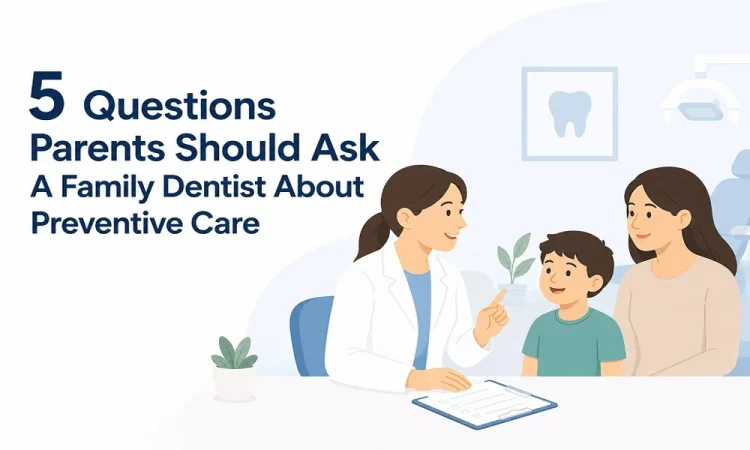
That is where 5 Questions Parents Should Ask A Family Dentist About Preventive Care becomes more than a checklist. It helps you move from guessing to knowing. Instead of leaving an appointment with a free toothbrush and a vague sense that things are fine, you leave with clear next steps.
So, what should you ask first? Start with, “Is my child at high risk for cavities?” According to MedlinePlus guidance on children’s dental health, regular dental visits and early prevention play a major role in avoiding decay. Risk depends on more than brushing. It can include diet, crowding, dry mouth, past cavities, and even how easily your child tolerates cleaning.
The second question is, “What should brushing and flossing look like at this age?” A five year old and a twelve year old do not need the same coaching. Many parents assume independence means effectiveness, but children often need supervision longer than expected.
The third question is, “Would fluoride or sealants help my child?” If that feels confusing, you are not alone. Parents hear mixed opinions, and it can be hard to know what is routine and what is only needed in certain cases.
Could small habits at home be creating bigger dental problems than you realize?
Sometimes the issue is not neglect. It is routine. Juice in a sippy cup. Crackers between meals. Brushing right after a child falls asleep in the car and then skipping it once inside. These moments feel minor, but over time they can feed tooth decay.
That is why the fourth question matters so much. Ask, “How is my child’s diet affecting their teeth?” Sugar is part of the story, but frequency matters too. Constant snacking gives bacteria more chances to produce acid. Even foods parents see as harmless can stick to teeth and linger.
The fifth question is, “How often should my child come in for preventive visits?” Many families assume twice a year is always enough, but some children benefit from more frequent checks. A good preventive dental care for kids plan should match the child, not just the calendar.
If you have wondered whether extra preventive steps are worth it, the research can help. The CDC explains that dental sealants can prevent many cavities in children’s back teeth, where decay often starts. The NIH also shares practical ideas for families in this piece on keeping kids’ mouths healthy, including how daily habits and routine care work together.
What should you compare when talking with a family dentist about cavity prevention?
When you are sitting in the chair, it helps to compare your options in a way that feels concrete. You do not need a lecture. You need a simple picture of what each part of prevention does and when it matters most.
| Question to Ask | Why It Matters | What a Helpful Answer May Include |
| Is my child at risk for cavities? | Risk is not the same for every child | Past decay, enamel strength, diet, crowding, oral habits, and family history |
| How should my child brush and floss right now? | Technique and supervision change with age | Amount of toothpaste, brushing time, flossing method, and when to step in |
| Do fluoride treatments or sealants make sense? | Some children need added protection | Age, cavity risk, molar eruption, and how easy it is to keep grooves clean |
| Which foods and drinks are causing trouble? | Frequency of sugar exposure can raise decay risk | Snack timing, sticky foods, sports drinks, juice, and bedtime habits |
| How often should we schedule visits? | Some children need closer follow up | Standard recall timing, signs to watch at home, and when earlier visits help |
This kind of conversation can also help with cost. Preventive visits, sealants, and fluoride are often easier to manage than fillings, crowns, or emergency care later. That does not mean every child needs every service. It means the best questions to ask a dentist about your child’s teeth can help you spend wisely and avoid surprises.
What can you do right now before the next family dentist visit?
1. Write down your child’s real habits.
Before the appointment, make a quick note of brushing struggles, snack patterns, thumb sucking, mouth breathing, tooth sensitivity, or any spots you have noticed. Honest details help your family dentist give advice that fits your home, not an ideal version of it.
2. Ask for a prevention plan, not just a cleaning.
At the visit, ask the five questions directly and request a simple plan for the next six to twelve months. That plan might include better brushing support, a change in snacks, fluoride treatment, sealants, or a different visit schedule. Good family dentist care should feel practical, not vague.
3. Keep one change small and consistent.
You do not need to fix everything in one week. Pick one habit and stick with it. That might mean brushing together at night, cutting out juice before bed, or switching from grazing to set snack times. Small changes repeated daily tend to work better than big plans that fade fast.
Where does that leave you as a parent trying to prevent dental problems early?
You do not have to know everything before you walk into the office. You just need the right questions and the confidence to ask them. Prevention is not about being perfect. It is about catching patterns early, getting clear guidance, and making steady choices that protect your child’s smile over time.
If you have been meaning to schedule a visit, now is a good time to talk with a family dentist and ask these five questions about preventive care. A short conversation today may spare your child pain and spare you a lot of worry later.